
Every sentence has a ▶ button — tap it to hear that sentence read slowly, one word at a time.
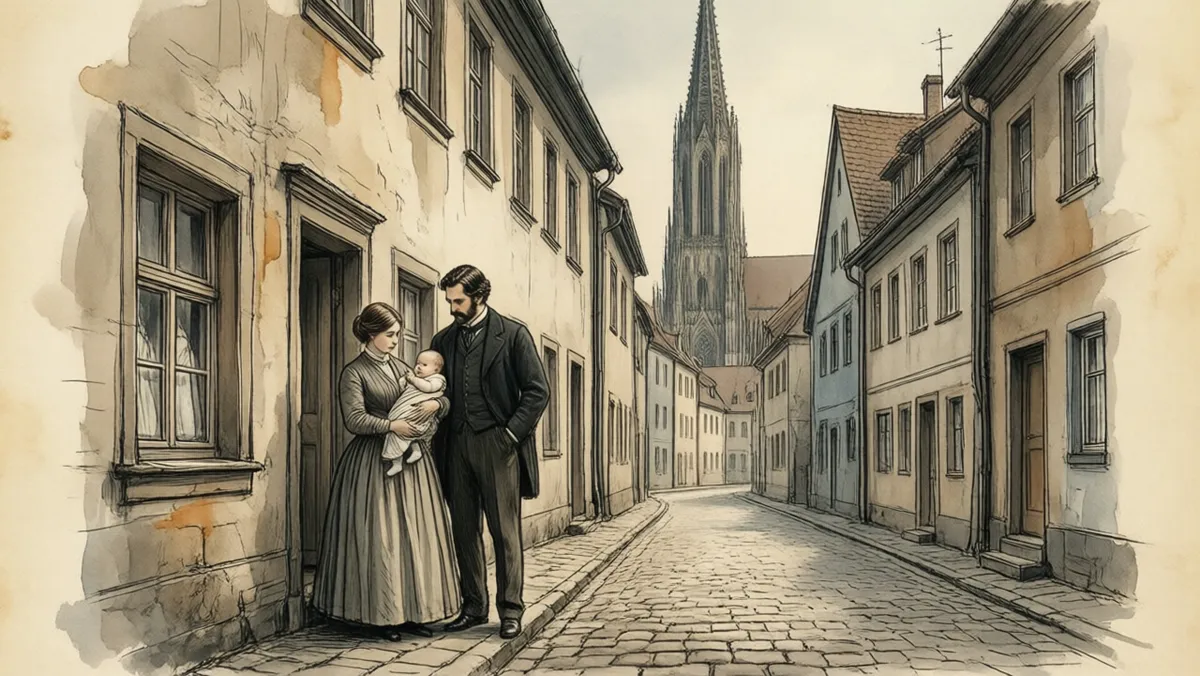
Albert Einstein was born in Ulm, Germany, in 1879.
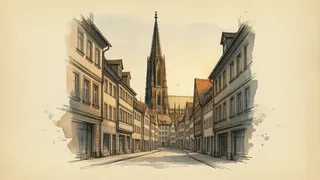
He was a quiet child who started speaking late, and one story says his worried parents even asked a doctor about it.

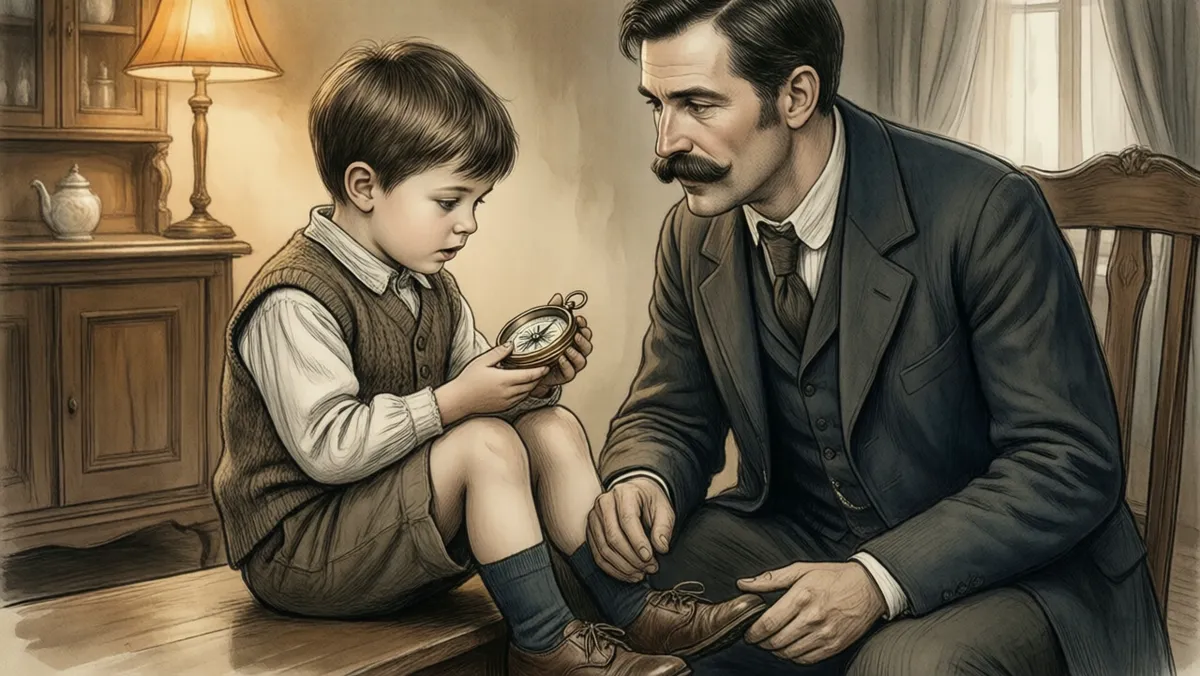
When Albert was five, his father showed him a compass.
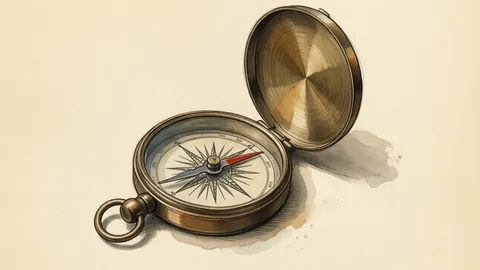
The needle always pointed north, moved by a force nobody could see.
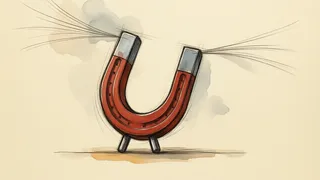
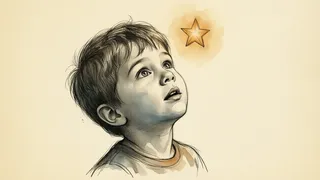
Albert never forgot that feeling of wonder.
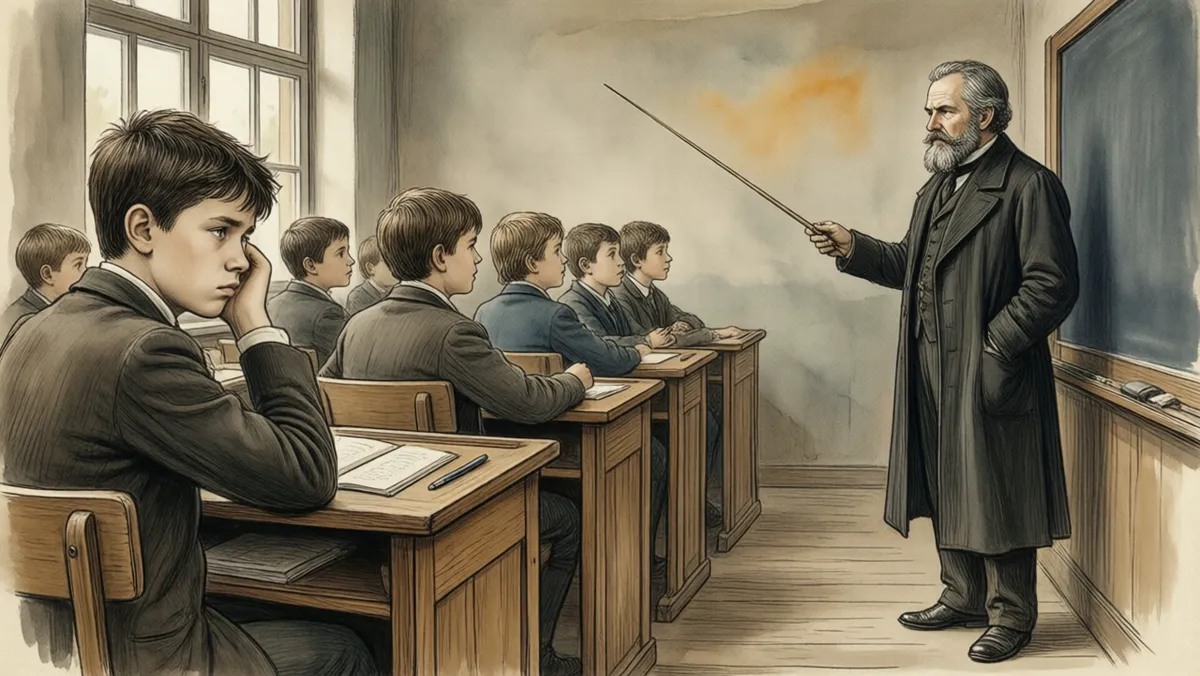
At school he was strong in math and physics but bored by lessons that only asked him to repeat facts.

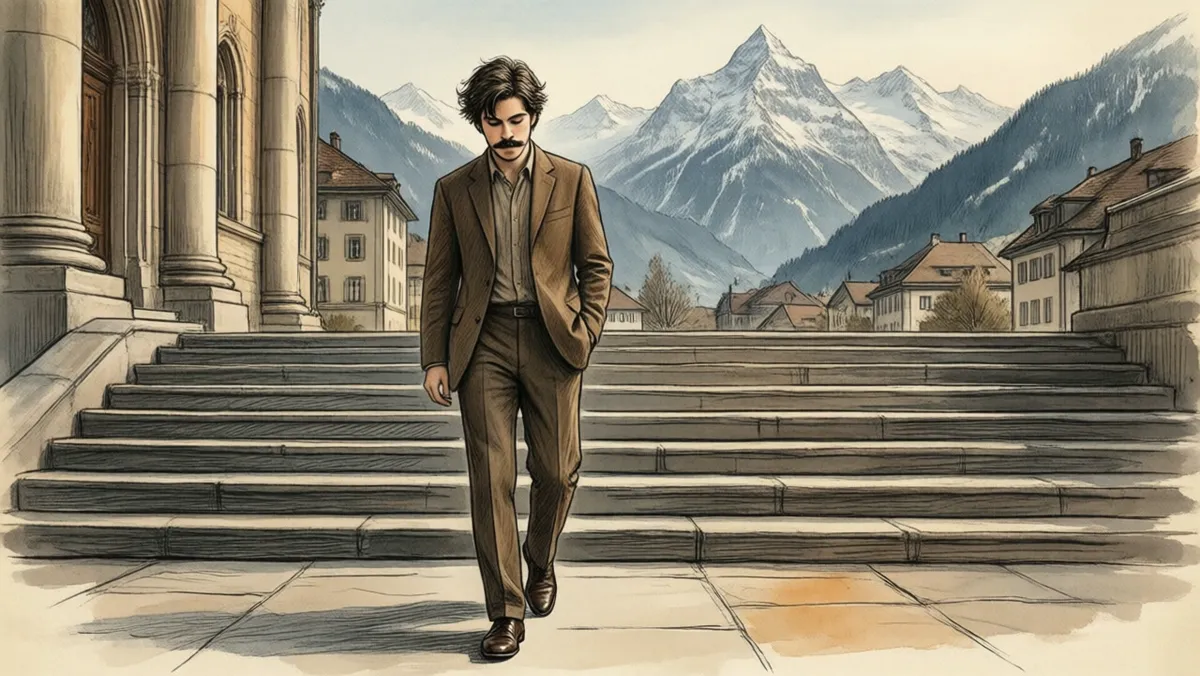
He finished his studies in Switzerland, but at first he could not find work as a teacher.

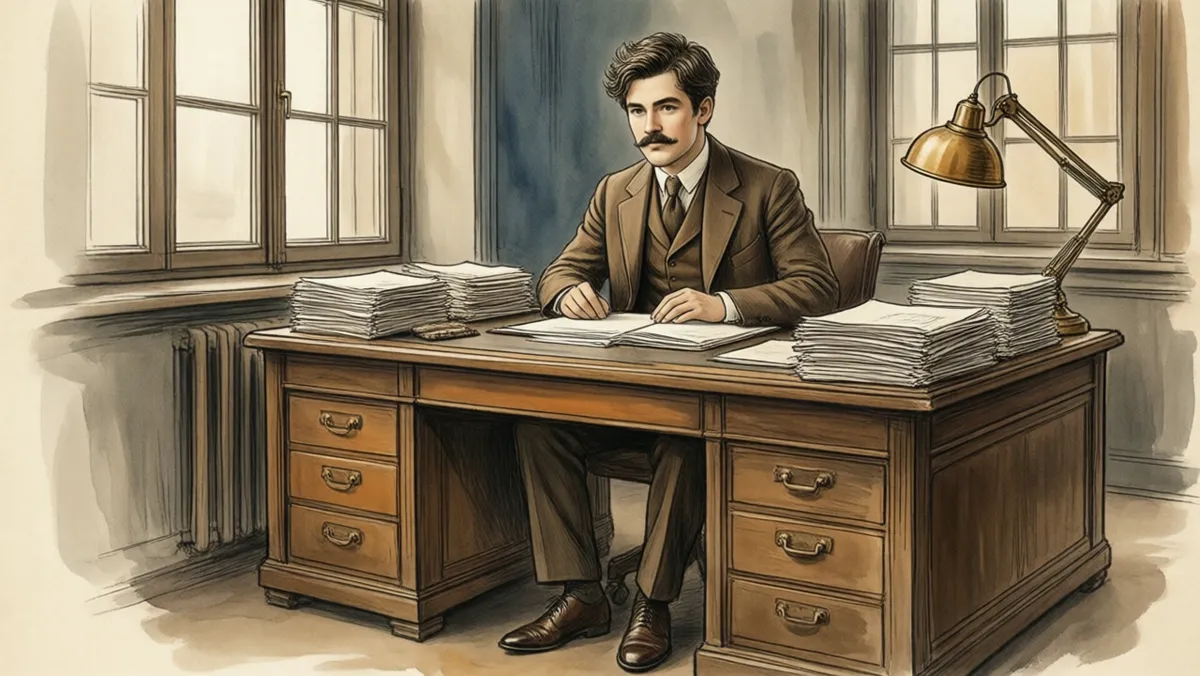
Instead, he took a job in a patent office in Bern, where he checked other people's inventions.
The work was easy for him, and it left his mind free to think.

In 1905, still working at that desk, the young Einstein published several papers that changed science forever.
He showed that light can act like a stream of tiny packets of energy.

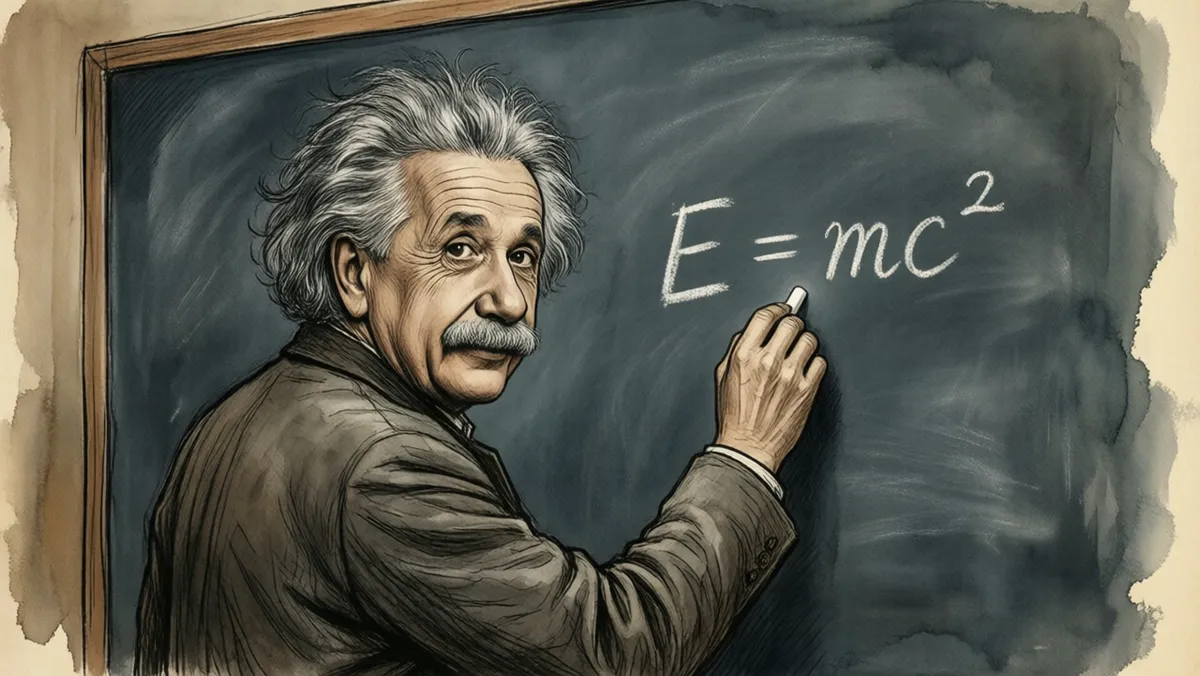
And he presented his theory of relativity, a new way to understand space and time.
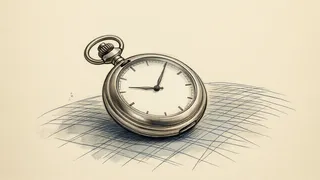
From it came the most famous equation in the world: E = mc².
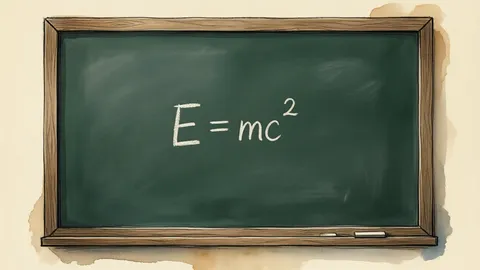
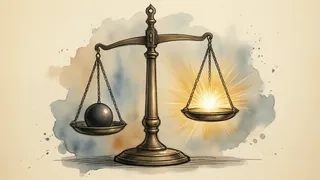
It means that mass and energy are two forms of the same thing.
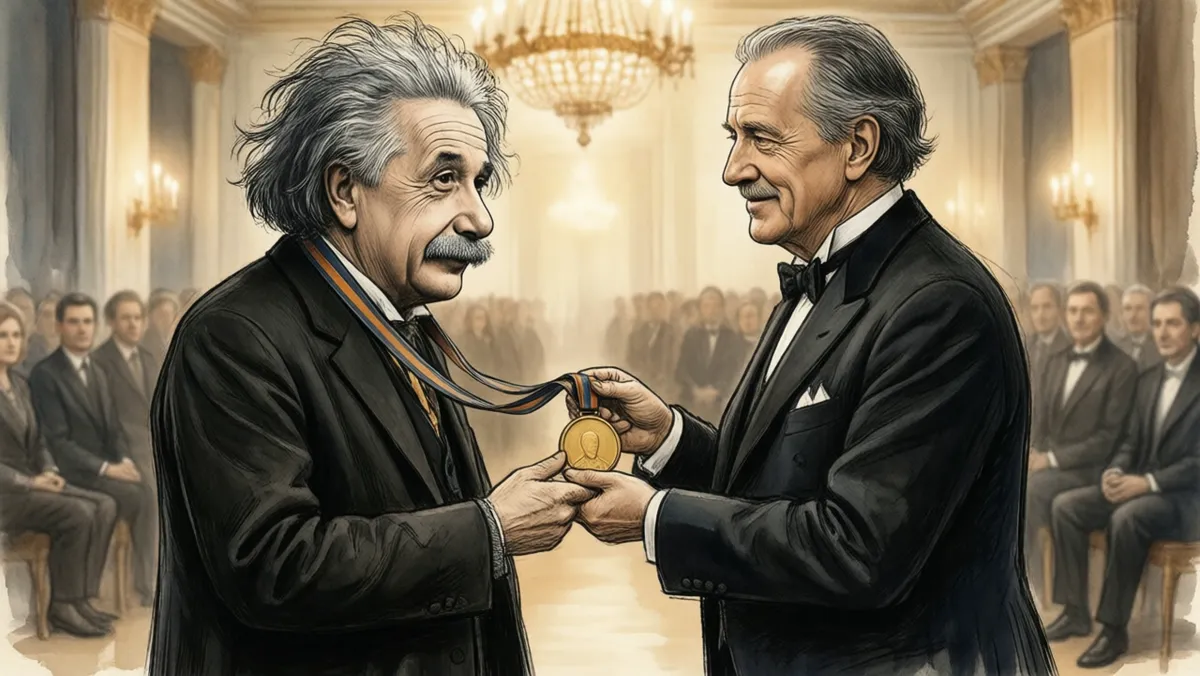
Einstein became famous around the world, and in 1921 he won the Nobel Prize in Physics.

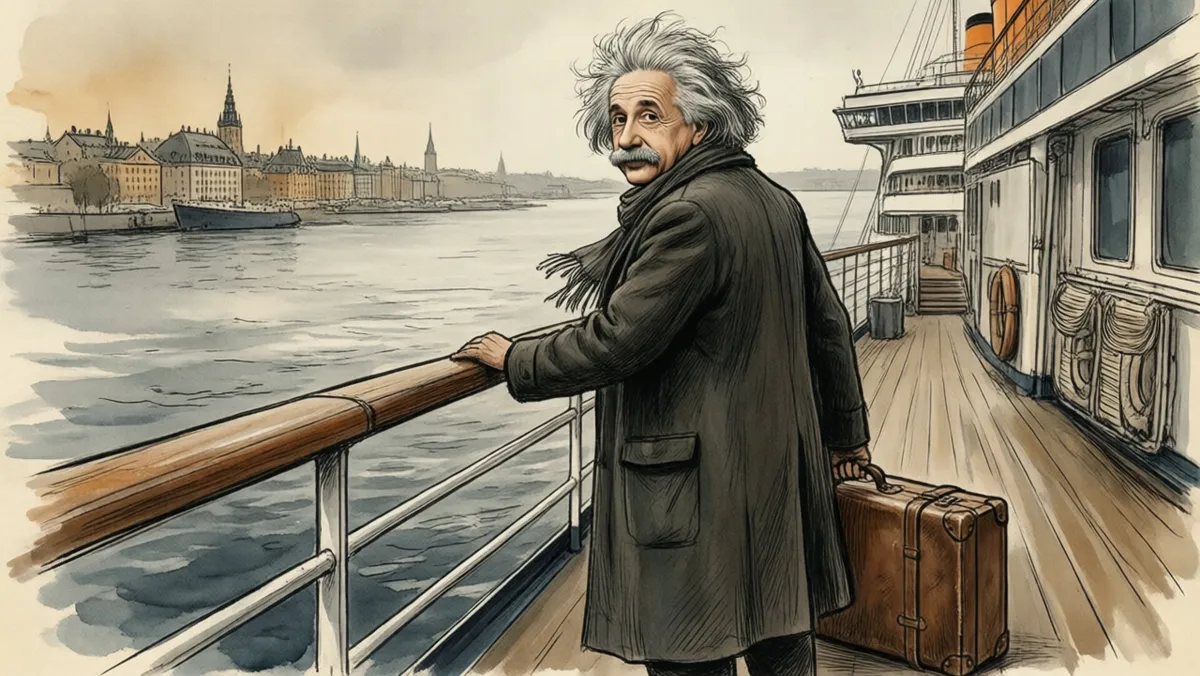
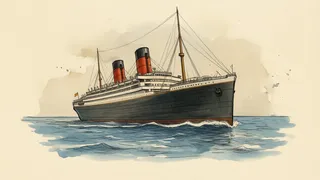
When Hitler took power in 1933, Einstein, who was Jewish, left Germany forever.
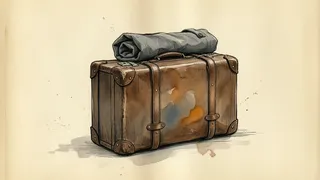
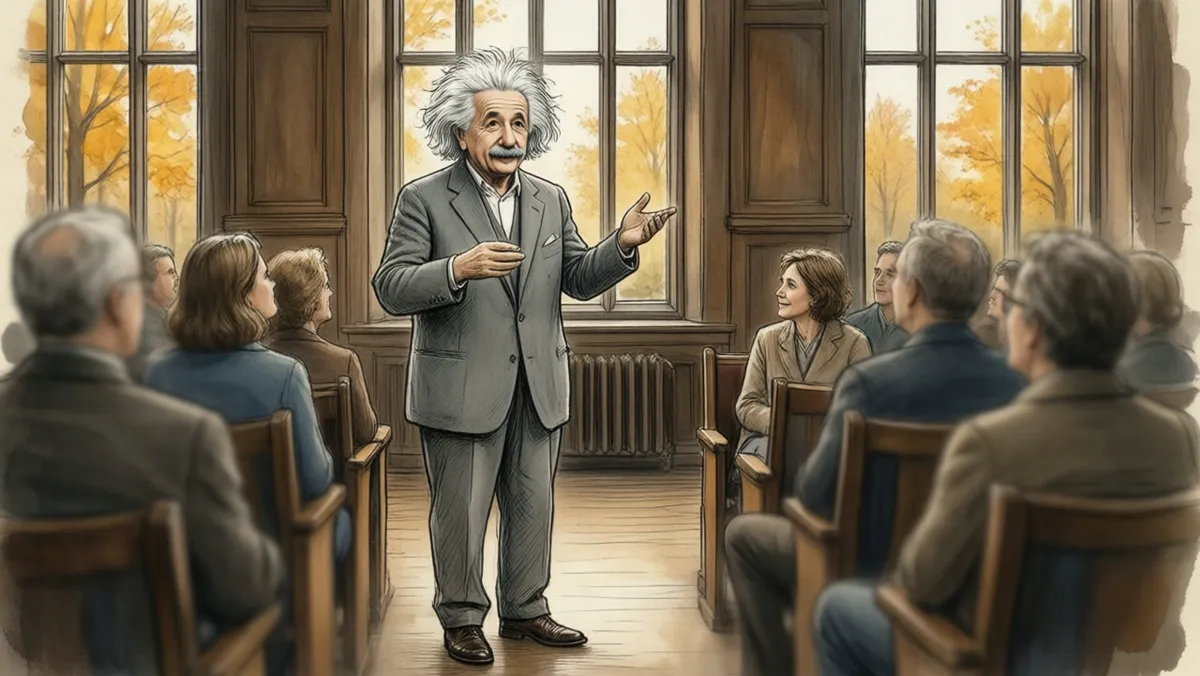
He moved to the United States and worked in Princeton until the end of his life.
He spoke often about peace, freedom, and human rights.

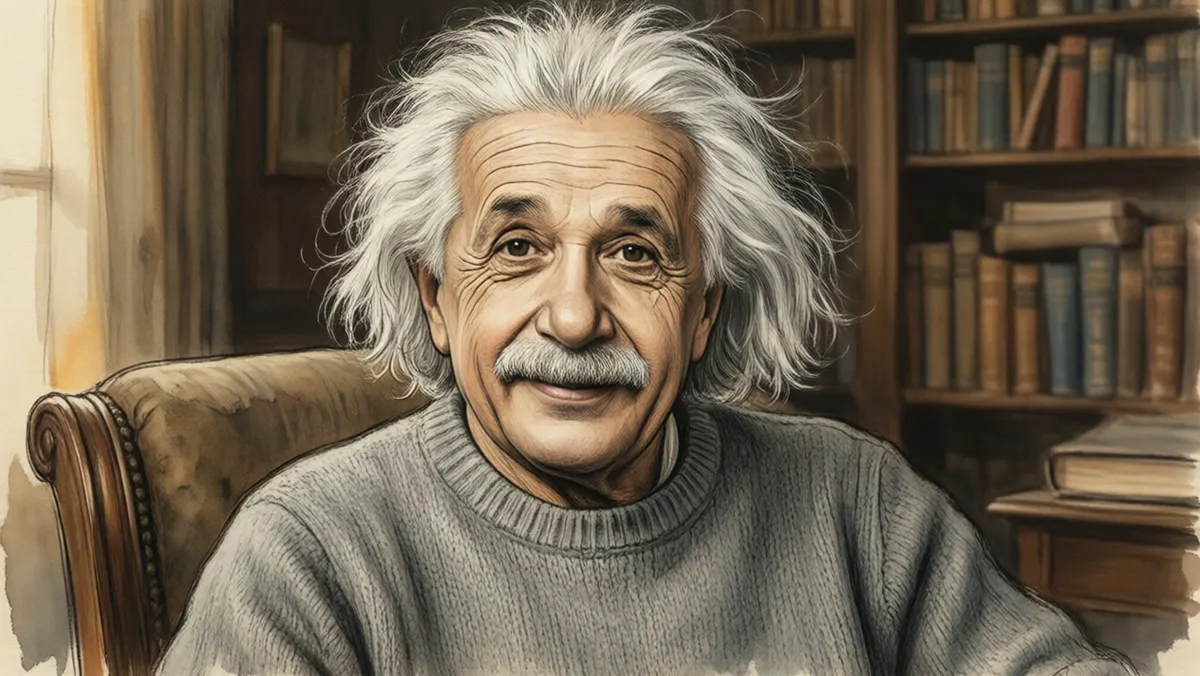
Einstein died in 1955.
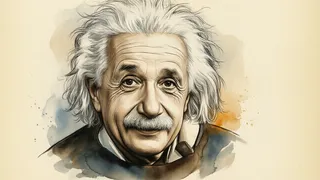
His wild hair and warm smile made him a symbol of the friendly genius.
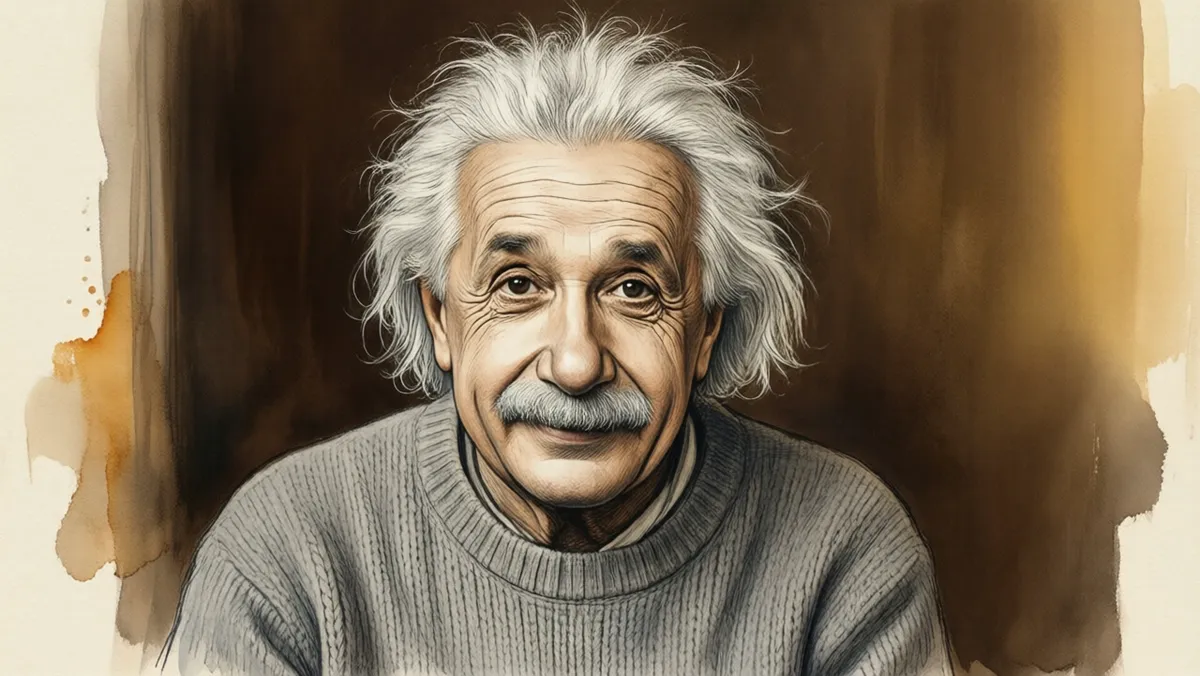
But he described himself simply: 'I have no special talents. I am only passionately curious.'