First words
A few hundred small words make up half of everything you will read or hear.

All of ESLDesk as one curriculum. Pick the level that sounds like you, then follow the numbered steps — every step is a real page with an adaptive quiz, and your progress is marked right here as you go. No sign-up. Not sure where you stand? Take the free 3-minute level test.
Your first English: the most common words, small grammar rules, easy reading.
Prefer one readable page? Read the full beginner path →
A few hundred small words make up half of everything you will read or hear.
Short, concrete topic lists — one topic per sitting, quiz before you leave.
One small rule at a time, each with an adaptive quiz.
Everyday texts in ESL Reader — tap any word to hear or translate it.
Short videos for learners — slow, clear, with the key phrases written out.
A few word pairs cause most beginner mistakes.
 7:02
Learn Tools & Equipment in English 🖼️ 53 Words with Pictures (A1-A2 Quiz)
7:02
Learn Tools & Equipment in English 🖼️ 53 Words with Pictures (A1-A2 Quiz)
 6:46
Learn Family & People in English 🖼️ 52 Words with Pictures (A1-A2 Quiz)
6:46
Learn Family & People in English 🖼️ 52 Words with Pictures (A1-A2 Quiz)
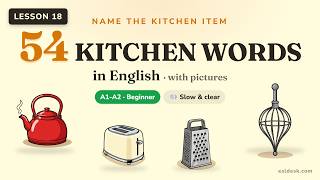 7:03
Learn Kitchen Items in English 🖼️ 54 Words with Pictures (A1-A2 Quiz)
7:03
Learn Kitchen Items in English 🖼️ 54 Words with Pictures (A1-A2 Quiz)
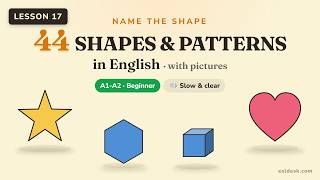 5:51
Learn Shapes & Patterns in English 🖼️ 44 Words with Pictures (A1-A2 Quiz)
5:51
Learn Shapes & Patterns in English 🖼️ 44 Words with Pictures (A1-A2 Quiz)
 8:45
Learn Feelings & Emotions in English 🖼️ 51 Words with Pictures (A1-A2 Quiz)
8:45
Learn Feelings & Emotions in English 🖼️ 51 Words with Pictures (A1-A2 Quiz)
 7:33
Learn Musical Instruments in English 🖼️ 51 Words with Pictures (A1-A2 Quiz)
7:33
Learn Musical Instruments in English 🖼️ 51 Words with Pictures (A1-A2 Quiz)
 20:48
All 12 English Tenses — The Complete Course 🕐 Simple, Continuous & Perfect (A1-B1)
20:48
All 12 English Tenses — The Complete Course 🕐 Simple, Continuous & Perfect (A1-B1)
 8:17
Learn Vehicles & Transport in English 🖼️ 57 Words with Pictures (A1-A2 Quiz)
8:17
Learn Vehicles & Transport in English 🖼️ 57 Words with Pictures (A1-A2 Quiz)
 7:50
Learn Insects & Bugs in English 🖼️ 53 Words with Pictures (A1-A2 Quiz)
7:50
Learn Insects & Bugs in English 🖼️ 53 Words with Pictures (A1-A2 Quiz)
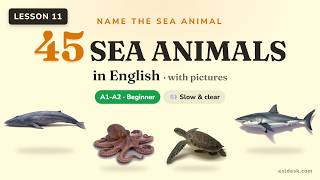 6:48
45 Sea Animals in English 🖼️ Beginner Picture Quiz
6:48
45 Sea Animals in English 🖼️ Beginner Picture Quiz
You can hold a conversation — now master tenses, structures, and real reading.
Prefer one readable page? Read the full intermediate path →
Everyday US English runs on phrasal verbs and irregular forms, not long words.
Intermediate English is mostly about tense choice.
Conditionals, passive voice, reported speech — one per week is a good pace.
Reading is where studied grammar becomes automatic.
Real situations and full grammar lists on video — slow enough to follow, real enough to use.
The difference between correct and natural is which words go together.
Written English is where intermediate learners get judged.
 15:39
English Conversation: Customer Service — Phone Calls, Complaints & Returns (15 Real Dialogues · B1)
15:39
English Conversation: Customer Service — Phone Calls, Complaints & Returns (15 Real Dialogues · B1)
 19:25
Learn Gerund and Infinitive in English 🖼️ 48 Verbs: -ing or to + Verb (A2)
19:25
Learn Gerund and Infinitive in English 🖼️ 48 Verbs: -ing or to + Verb (A2)
 16:12
English for Getting Around — Directions, Subway, Bus, Rideshare (15 Real Dialogues · B1)
16:12
English for Getting Around — Directions, Subway, Bus, Rideshare (15 Real Dialogues · B1)
 15:17
Countable and Uncountable Nouns 🖼️ a loaf of bread, a piece of advice (A1-A2)
15:17
Countable and Uncountable Nouns 🖼️ a loaf of bread, a piece of advice (A1-A2)
 15:07
Small Talk in English — Neighbors, Coworkers, a Party (15 Real Dialogues · B1)
15:07
Small Talk in English — Neighbors, Coworkers, a Party (15 Real Dialogues · B1)
 17:12
Prepositions of Place in English 🖼️ 50 Pictures — Where Is the Cat? (A1)
17:12
Prepositions of Place in English 🖼️ 50 Pictures — Where Is the Cat? (A1)
 15:11
Regular Verbs in English 🖼️ 60 Verbs — How to Say -ED (A1-A2)
15:11
Regular Verbs in English 🖼️ 60 Verbs — How to Say -ED (A1-A2)
 15:39
English at the Supermarket — Aisles, Deli Counter, Checkout (15 Real Dialogues · B1)
15:39
English at the Supermarket — Aisles, Deli Counter, Checkout (15 Real Dialogues · B1)
 13:32
How to Read an Analog Clock 🕒 Tell the Time in English — 48 Clocks (A1)
13:32
How to Read an Analog Clock 🕒 Tell the Time in English — 48 Clocks (A1)
 9:27
Prepositions of Time — in, on, at, for, since ⏰ English Prepositions #3 (A2)
9:27
Prepositions of Time — in, on, at, for, since ⏰ English Prepositions #3 (A2)
Comfortable in English — now aim for precision, polish, and full books.
Prefer one readable page? Read the full advanced path →
The difference between 'very important' and 'crucial'.
Advanced lists organized by nouns, adjectives, and adverbs.
The rules editors check.
Business English and the sayings natives grew up with.
Full novels, chapter by chapter — one chapter a day is a serious workout.
Find your remaining gaps, then drill exactly those.