

Every line has a ▶ button — tap it to hear that line spoken, one word at a time.

Marcus: Hi there, welcome in. What can I do for you?
Mia: Hi. I'd like to open a checking account. I just moved here for work.
a checking account — the everyday account you pay from · savings = where money sits and earns interest
Marcus: Welcome to the neighborhood. Do you have a photo ID with you?
Mia: Yes, my driver's license. And here's my Social Security number.
Marcus: Perfect. There's a twenty-five dollar minimum to open it.
Mia: That's fine. Is there a monthly fee?
Marcus: Ten dollars a month, but it's waived if you set up direct deposit.
waived — you don't have to pay it
Mia: My employer pays by direct deposit, so that works.
Marcus: Great. When we're done, I'll print your debit card right here.
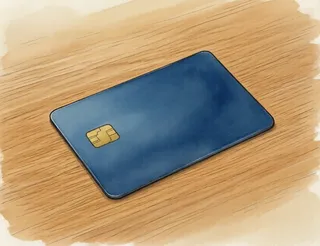
a debit card — pays straight from your checking account
Mia: Oh, that's convenient.
Mia: Hi, I'm here to open an account. I was told to bring two forms of ID.
two forms of ID — two documents that prove who you are and where you live
Marcus: That's right. A photo ID, plus something with your current address on it.
Mia: I have my passport. But what counts as proof of address?
proof of address — a lease, a utility bill or a bank statement with your name and address on it
Marcus: A lease, a utility bill, or a recent bank statement.
Mia: My lease is on my phone. Is an electronic copy okay?
Marcus: That works, as long as your name is on it.
Mia: Here it is. And my job needs my routing number for direct deposit.
the routing number — the nine-digit code for your bank · the account number is yours alone
Marcus: Sure. I'll print a form with both numbers for your employer.
Mia: Perfect. That's exactly what I needed.
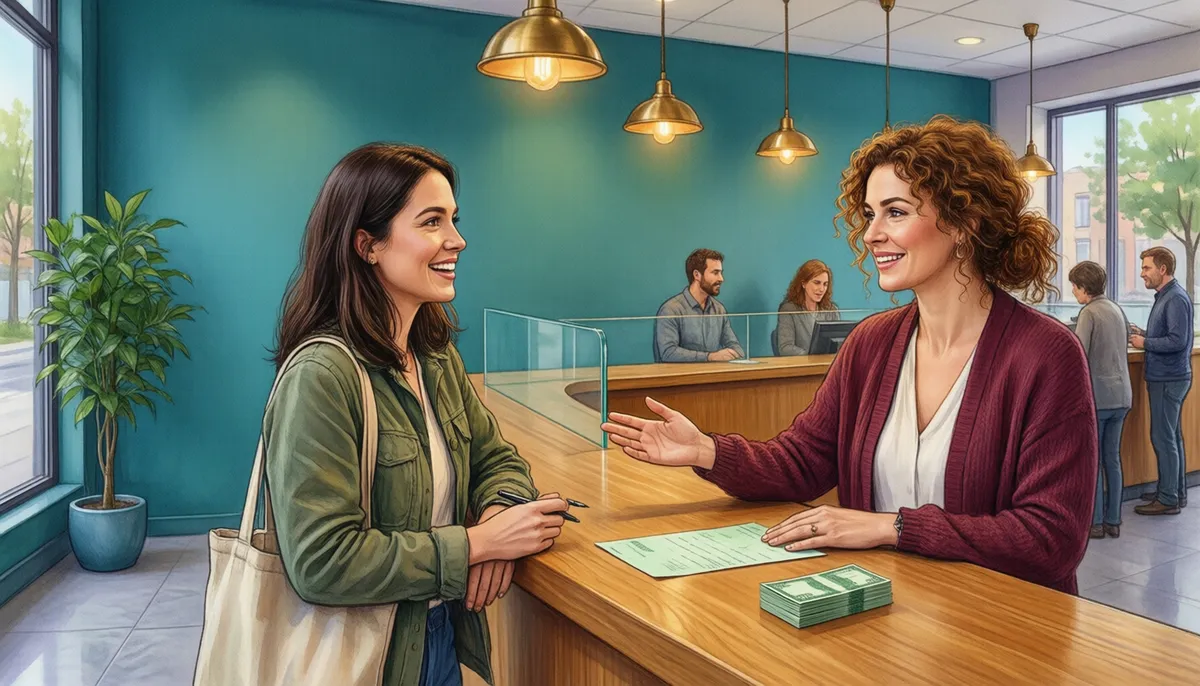
Dana: Good morning! What can I do for you?
Mia: I'd like to deposit this check into my checking account.
Dana: Sure. Could you endorse the back for me? Just sign on the line.
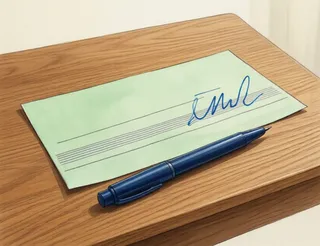
endorse — the check · sign the back, on the line
Mia: Done. Do I need a deposit slip?
a deposit slip — the small form that says which account the money goes into
Dana: No need. Just insert your card and enter your PIN. Any cash back today?
cash back — deposit the check, but take part of it in cash
Mia: No, all of it. When will the money be available?
Dana: There's a short hold. Two seventy-five tomorrow, and the rest on Wednesday.
a hold — the bank waits a day or two before it releases the money
Mia: Okay, that's fine. Thanks!
Mia: Hi, I'd like to make a withdrawal, please.
a withdrawal — taking money OUT · a deposit = putting money IN
Dana: Of course. Swipe your card and enter your PIN. How much would you like?
Mia: Four hundred dollars, from checking.
Dana: And how would you like that? Large bills, or twenties?
large bills — small bills · ones, fives, tens and twenties
Mia: Twenties, please. Actually, could one hundred be in tens? I need small bills.
Dana: Sure. Three hundred in twenties, one hundred in tens. Let me count that back for you.
count it back — count the money out loud in front of you
Mia: Perfect, thank you.
Dana: Would you like a receipt, or are you all set?
Mia: No receipt, I'm all set. Have a good one.
Mia: Hi. I need a cashier's check for my apartment deposit.
a cashier's check — a check the bank itself guarantees, so it can't bounce
Dana: Sure, I can do that. Who should it be made out to?
made out to — written in the name of
Mia: Maple Street Apartments, for fifteen hundred dollars. Is there a fee?
Dana: There's a ten-dollar fee. And that's coming out of your checking account, right?
Mia: Yes, checking. Could you put my apartment number in the memo line?
the memo line — the short note line at the bottom of a check
Dana: Of course. What's the number?
Mia: Four B.
Dana: Here you go. Hold on to the receipt, in case it ever gets lost.
Mia: Will do. Thank you.

Marcus: Okay, your card just finished printing. Let's activate it and set your PIN.
activate it — switch the new card on, so it works · PIN = your secret four-digit number
Mia: Can I choose the PIN myself?
Marcus: Yes. Enter four digits on the keypad, then enter them again to confirm.
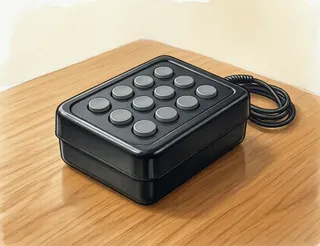
the keypad — type your PIN here
Mia: Done. Can I use it right away?
Marcus: Right away. It's tap to pay, so at most stores you just tap it.
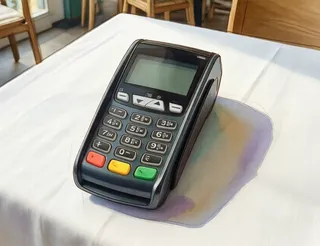
tap to pay — touch the card to the reader, no PIN for small amounts
Mia: And is there a daily limit?
a daily limit — the most you can spend or withdraw in one day
Marcus: Five hundred at the ATM, two thousand on purchases. You can change that in the app.
Mia: Perfect. Thank you.
Mia: Hi, I think I lost my debit card. Can you cancel it?
Marcus: Of course. Did you lock it in the app yet?
lock the card — switch it off in the app, so nobody can use it
Mia: No, I came straight here.
Marcus: Okay, it's canceled. I checked your recent transactions, and nobody's used it.
Mia: Phew. So what happens now?
Marcus: I'll print a replacement right here. Same account, new card number.
a replacement — a new card in place of the lost one
Mia: Great. Will my automatic payments still go through?
automatic payments — bills paid from your card every month without you doing anything
Marcus: Anything on the old card number will need updating. I'd do that tonight.
Mia: Okay, I'll do that. Thanks for your help.
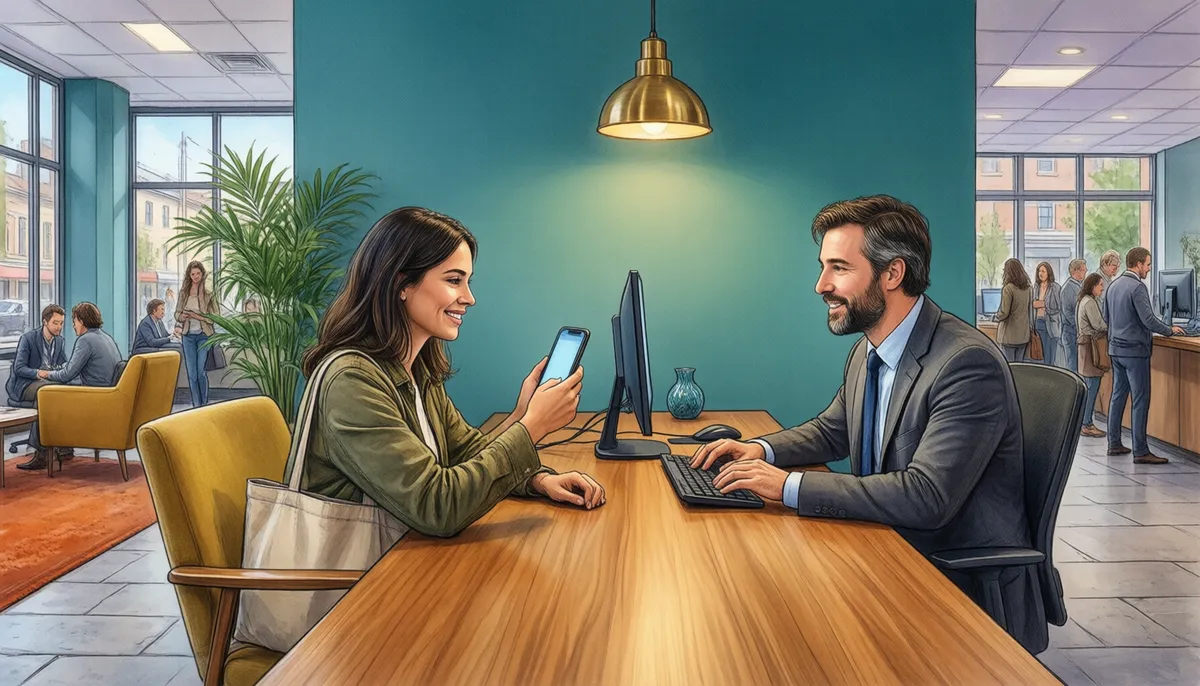
Mia: Hi. I need to send money to my parents overseas. What's the best way?
Marcus: An international wire transfer. How much are you sending?
a wire transfer — money sent directly from one bank to another
Mia: About two thousand. What do you need from me?
Marcus: Their full name, their bank's name, the account number, and the bank's SWIFT code.
the SWIFT code — the code that identifies a bank outside the US
Mia: I have all that on my phone. Is there a fee?
Marcus: Forty-five dollars. And their bank may charge something on their end.
Mia: Okay. How long does it take?
Marcus: One to two business days. If we send it before four, it goes out today.
business days — Monday to Friday · not weekends, not holidays
Mia: Great, let's do it now.
Mia: I owe my friend sixty dollars. What's the cheapest way to send it?
Marcus: Use Zelle in our app. It's free, and it's instant.
Zelle — a free bank-to-bank payment built into most US banking apps
Mia: Do I need her account number?
Marcus: No, just her phone number or email, as long as she's enrolled with her bank.
Mia: That's easy. Is there a limit?
Marcus: A few hundred a day. And it can't be reversed, so double-check her number.
reversed — canceled and sent back
Mia: Got it. And what about moving money into my savings?
Marcus: That's a transfer between your own accounts. Free, and instant in the app.
a transfer — moving money between your own accounts
Mia: Perfect. I'll do that tonight.
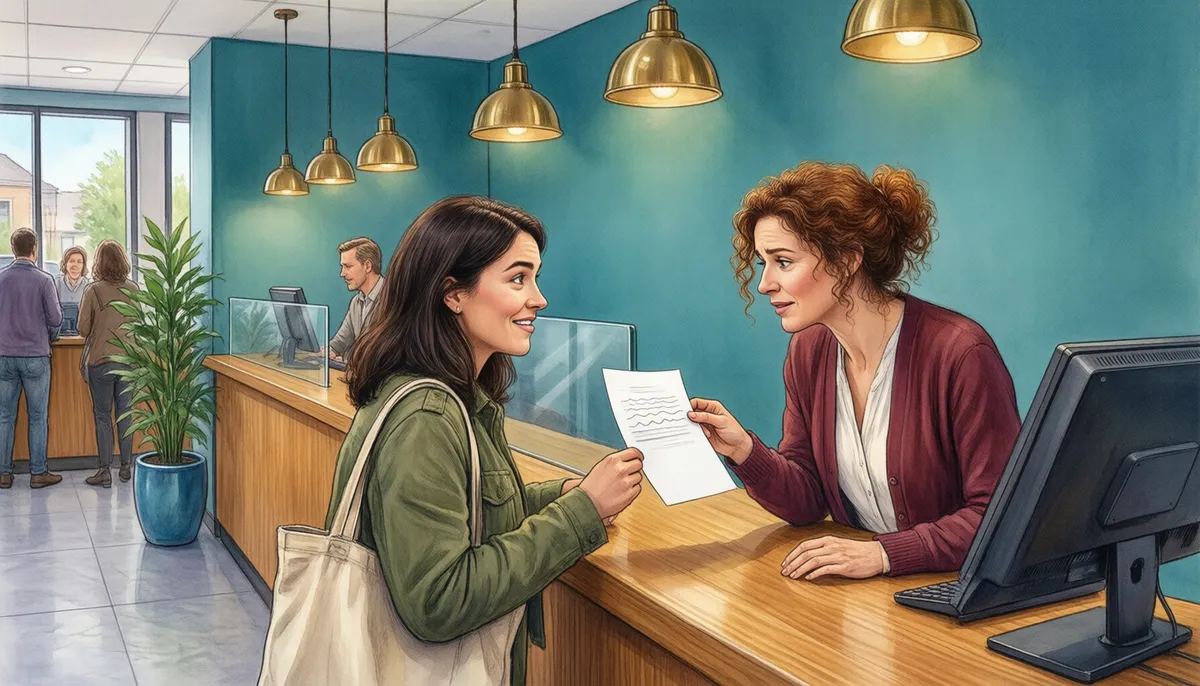
Mia: Hi. There's a thirty-five dollar fee on my account. What is that?
Dana: Let me look. That's an overdraft fee from last Tuesday.
an overdraft fee — you spent more than you had, the bank covered it, and charged you
Mia: My rent went out on Tuesday, and my paycheck came in Wednesday morning.
Dana: Right, so the account was negative overnight. That's what triggered the fee.
Mia: Is there any way to get it waived? It's never happened before.
get it waived — ask the bank to cancel the fee, as a favor
Dana: Since it's your first one, I can refund it as a one-time courtesy.
a one-time courtesy — a favor the bank does once, not a rule
Mia: Thank you, I really appreciate that.
Dana: I'd also suggest overdraft protection. It pulls from your savings instead of a fee.
overdraft protection — money comes from your savings automatically, instead of a fee
Mia: Yes, let's set that up. Thanks so much.
Mia: Hi. There's a charge on my account that I don't recognize. Eighty-nine dollars.
Dana: Let's take a look. When was it?
Mia: Saturday. I've never shopped there, and my card never left my wallet.
Dana: Okay. That looks like fraud. I'll file a dispute for you right now.
file a dispute — officially tell the bank you did not make that charge
Mia: Do I get the money back?
Dana: Yes. We'll replace the card, and you'll get a provisional credit while we investigate.
a provisional credit — the money back, temporarily, while the bank investigates
Mia: Okay. Should I change my online passwords too?
Dana: Good idea. And turn on transaction alerts, so you see every charge as it happens.
transaction alerts — a text or notification for every payment on your card
Mia: I will. Thanks for sorting this out.
Mia: Hi. My card got declined this morning, and there's money in the account.
declined — the payment was refused
Dana: Let me check. Ah, our fraud system locked the card last night.
Mia: Locked it? Why?
Dana: Several purchases in another state in one afternoon. That's a common trigger. Were those you?
a trigger — something that sets off the bank's fraud system
Mia: Yes! I was out of town for a wedding.
Dana: Then it's all good. I've unlocked it, and you can use it right away.
Mia: Thanks. How do I stop that next time?
Dana: Set a travel notice in the app before you go: the dates and the places.
a travel notice — you tell the bank where you'll be, so it doesn't lock your card
Mia: That's easy enough. Thanks for your help.

Mia: Hi. I'm flying to Europe next week. Can I get some euros here?
Marcus: We'd have to order them. We don't keep foreign currency in the branch.
foreign currency — money from another country
Mia: How long does that take?
Marcus: Two business days. How much do you want to change?
Mia: About three hundred dollars' worth. What's the exchange rate?
the exchange rate — how many euros you get for one dollar · it changes every day
Marcus: I'll print today's rate. It changes daily, and there's a five-dollar fee.
Mia: That's fine. Could I get small bills? Nothing bigger than fifty.
small bills — low-value notes: fives, tens, twenties
Marcus: Sure, I'll add that to the order and call you when it's in.
Mia: Perfect, thank you.
Mia: Hi. I have a form that needs to be notarized. Can you do that here?
notarized — an official person watches you sign, then stamps the paper
Marcus: We do, and it's free for account holders. Do you have a photo ID?
Mia: My passport, yes. But I already signed the form.
Marcus: Actually, yes. I need to watch you sign it. Do you have a blank copy?
watch you sign it — never sign before the notary · bring an unsigned copy
Mia: I do. I printed two, just in case.
Marcus: Perfect. Sign here, on this line, and I'll add my stamp.
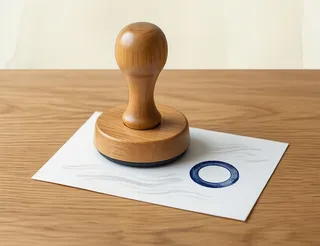
the notary stamp — the official mark that makes it valid
Mia: Done. Could I also get a stamped bank statement?
a bank statement — the list of everything that went in and out of your account
Marcus: Sure. The last three months? I'll print and stamp it for you.
Mia: Three months, yes. Thanks a lot.
Mia: Hi. I'm moving out of state next month, so I need to close my account.
close my account — end it for good · the bank gives you what is left
Marcus: Sorry to see you go. You know we have branches in most states?
Mia: I know, but my new employer uses a local credit union.
a credit union — a small bank owned by its members, not by shareholders
Marcus: Fair enough. Any pending transactions or automatic payments on the account?
pending — started, but not finished yet
Mia: My phone bill comes out on the fifteenth. I'll switch that over first.
Marcus: Good. Once that clears, we close it. Do you want the balance transferred, or a check?
Mia: A transfer, please. Is there a fee to close it?
Marcus: No fee. Keep the debit card until the transfer goes through, then cut it up.
cut it up — destroy the old card with scissors
Mia: Will do. Thanks, that's easy.