

Every line has a ▶ button — tap it to hear that line spoken, one word at a time.

Ben: Hi, is this Jayden? This is Ben from Bluestone Home and Garden, about the part-time sales associate job.
a sales associate · part-time — a sales associate = a store worker who helps customers; entry-level · part-time = usually under thirty hours a week, often without benefits
Jayden: Yes! Hi. Thanks for calling back.
Ben: Do you have a few minutes? Just some quick questions. First, what's your availability?
your availability — = which days and hours CAN you work? · "open availability" = any time · say the days and the hours clearly
Jayden: I'm a student, so weekdays after three, and any time on weekends.
Ben: Weekends are the big one. And you're okay being on your feet all day, and lifting bags of soil?

on your feet all day · lifting — "on your feet all day, lifting bags of soil" · standing all shift, carrying forty-pound bags · say "I'm used to it" and give proof
Jayden: That's fine. I worked at a coffee shop last summer, so I'm used to it.
I'm used to it — = it's normal for me · prove it with one past job: "I worked at a coffee shop last summer"
Ben: Good. The pay is sixteen fifty an hour, about twenty hours a week. Does that work for you?
sixteen fifty an hour — = $16.50 per hour, paid every two weeks · twenty hours = part-time · "does that work for you?" = is that acceptable?
Jayden: That works.
Ben: Great. Can you come in Thursday at four to meet me and the store manager?
come in — come in = come to the office for an interview · repeat the day and the time back: "Thursday at four. I'll be there."
Jayden: Thursday at four. I'll be there. Thank you!

Jayden: Hi, I'm Jayden. I'm so sorry, I'm a few minutes late. The bus was late.
a few minutes late — apologize once, briefly, give the reason in three words, and move on · if you can, call or text before
Ben: No problem, have a seat. So, Jayden, tell me a little about yourself.
Jayden: I'm a sophomore at the community college, studying business. I like being around people. And I like plants, honestly. My mom has a huge garden.
a sophomore — a second-year student · freshman, sophomore, junior, senior · the community college = a two-year public college
Ben: Nice. So why do you want to work here, and not at a coffee shop again?
why do you want to work here? — = why THIS place? · one honest reason about the job, not "I need money"
Jayden: The coffee shop was fine, but I want to learn something. Here I'd actually know what I'm selling.
Ben: Fair. Tell me about a time you helped a difficult customer.
a difficult customer — a real story in three sentences: what happened, what YOU did, how it ended
Jayden: A man got angry because we ran out of oat milk. I apologized, offered him almond milk for free, and he calmed down.
Ben: Good. And what would you do if a customer asked about a plant you knew nothing about?
what would you do if… — a "situational" question · there is a right answer, and it is usually: ask, check, find out
Jayden: I'd say I'm not sure, but let me find out. And I'd ask someone, or look it up.
I'm not sure, but let me find out — the best answer to any question you can't answer · never make it up
Ben: That's the right answer. Don't make it up.

Ben: Okay, Jayden, I'd like to offer you the job. Let me tell you how it works.
offer you the job — = you're hired · for hourly jobs the offer often comes right in the interview · now ask how it works
Jayden: Really? Great!
Ben: The schedule comes out two weeks ahead. On a full shift you get two fifteen-minute breaks and a thirty-minute lunch.
the schedule · breaks — the schedule comes out two weeks ahead · two fifteen-minute breaks and a thirty-minute lunch · the short breaks are usually paid, the lunch usually isn't
Jayden: Are the breaks paid?
Ben: The fifteens are paid, the lunch isn't. Dress code is khakis, closed-toe shoes, and we give you the green vest.

the dress code — khakis, closed-toe shoes, the green vest · khakis = plain tan pants · closed-toe = no sandals
Jayden: Okay.
Ben: You get twenty percent off in the store after thirty days. And the first week is training, paid.
twenty percent off · training, paid — the employee discount, often after thirty days · training is work: it is paid
Jayden: When would I start?
When would I start? — ask it · the answer tells you about orientation, paperwork and your first paycheck
Ben: Orientation is Monday at nine. Bring two forms of ID, and I'll email you the paperwork tonight.
orientation · two forms of ID — orientation = the first day: paperwork, rules, a tour · the ID is for the I-9 form: a passport, OR a driver's license plus a Social Security card
Jayden: Two forms of ID. Got it. Thank you so much, Ben.
Ben: Welcome to the team.

Ben: Hi, Carlos? This is Ben from Bluestone Home and Garden, about the delivery driver position. Is this a good time?
Is this a good time? — = can we talk now? · if not: "Could you call back after five?" is a fine answer
Carlos: Yes, this is a good time.
Ben: Great. Do you have a valid driver's license and a clean driving record?
a valid license · a clean driving record — valid = current, not expired · clean = no tickets, no accidents · they check your MVR, the motor vehicle record
Carlos: Yes. I got my license here last year. No tickets, no accidents.
Ben: It's a box truck, so no CDL needed. Can you lift fifty pounds, all day?
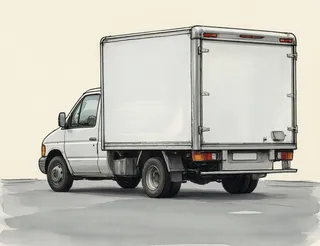
a box truck · no CDL · fifty pounds — a box truck, no CDL needed · CDL = the license for big trucks · "lift fifty pounds" = the standard delivery and warehouse question
Carlos: No problem. I drove trucks in Guatemala for eight years, and now I work in a warehouse.
experience from another country — experience from another country counts · say it in one line: what, where, how long · then what you do here now
Ben: That's good experience. The shift starts at six in the morning, Tuesday to Saturday. Is that okay?
the shift starts at six — a shift = your work period · six a.m. starts are normal for drivers · answer clearly: "Six is fine."
Carlos: Six is fine. I'm used to early.
Ben: The pay is twenty-three an hour, full-time, with benefits after sixty days. There's a background check and a drug screen.
a background check and a drug screen — benefits after sixty days · a drug screen = a drug test; normal for drivers · you sign a consent form for both
Carlos: That's all fine with me.
Ben: Can you come in Wednesday at ten for an interview?
Carlos: Wednesday at ten. Yes. Thank you.

Ben: Thanks for coming in, Carlos. Walk me through your resume.
walk me through your resume — ." · your jobs in order, one line each: what, where, how long, why you left
Carlos: Sure. In Guatemala I drove a delivery truck for eight years, for a beverage company. Then I moved here three years ago.
Ben: And the first year here?
the first year here — = explain the gap · a gap with a reason is no problem: the license, the language, a first job
Carlos: I worked in a restaurant kitchen while I got my license and learned English. Then the warehouse job, two years now.
Ben: Why do you want to leave the warehouse?
why do you want to leave? — say what you want NEXT, never what is wrong now · "no room to move up" = no chance of a better position
Carlos: I like driving more. And there's no room to move up where I am.
Ben: Tell me about a time a delivery went wrong.
a delivery went wrong — went wrong = had a problem · the story they want: the problem, what YOU did, how it ended · "you didn't just leave it"
Carlos: Once the address was wrong and the customer wasn't answering. I called my dispatcher, and we found the right building.
my dispatcher — the person at the office who plans the routes and answers the drivers' calls
Ben: You didn't just leave it. Good. Any questions for me?
Any questions for me? — always have one about the WORK: "Do drivers unload alone, or with a helper?"
Carlos: Do drivers unload alone, or with a helper?
Ben: Alone for small orders, with a helper for the big ones.
Carlos: Okay. Thank you.

Ben: Carlos, it's Ben from Bluestone. Good news. We'd like to offer you the driver position.
offer you the position — the position = the job · the offer call: listen, write the numbers down, then say it clearly
Carlos: That's great news. Thank you!
Ben: Twenty-three an hour, full-time, Tuesday to Saturday, six to two thirty. Overtime is time and a half after forty hours.
time and a half — = one and a half times your hourly pay · US law for hourly workers, after forty hours in one week
Carlos: Okay.
Ben: Health insurance and dental start after sixty days. You get five sick days and ten vacation days a year.
dental · sick days · vacation days — dental = insurance for your teeth · sick days + vacation days = your paid time off, PTO · often earned month by month
Carlos: And the boots? Do I need to buy them?
Ben: Steel-toe boots, yes. We reimburse up to a hundred dollars. Just bring the receipt.

steel-toe boots · reimburse — steel-toe boots · "we reimburse up to a hundred dollars, just bring the receipt" · reimburse = pay you back
Carlos: Good. When do I start?
Ben: Monday the fourth, orientation at eight. The background check should clear by then.
Carlos: I accept. Thank you, Ben.
I accept — say it clearly · "the background check should clear by then" = should come back with no problems
Ben: Welcome aboard. See you Monday.
Welcome aboard — = welcome to the company · also "welcome to the team"

Ben: Amara, thanks for coming in. Tell me about yourself.
Tell me about yourself — the opening question · under two minutes: what you did, what happened next, what you want now
Amara: Thank you. I was a customer service rep at a bank for three years. Then I took four years off to raise my kids.
a rep · took four years off — a rep = a representative · a gap on your resume: one sentence, no apology
Ben: You don't need to explain the gap, but thank you. What did you like about the bank?
you don't need to explain the gap — an interviewer may NOT ask about your children, age, marriage, religion, nationality or health · you may CHOOSE to say it
Amara: Solving problems. Someone calls upset, and ten minutes later they're thanking you.
Ben: This job is mostly phone and chat, about sixty calls a day. Are you comfortable with that?

phone and chat — "mostly phone and chat, about sixty calls a day" · chat = typed messages with customers · "comfortable with that?" = okay with that?
Amara: Sixty is a lot, but yes. At the bank it was about forty.
Ben: The hours are eight to five, and after training it's hybrid, two days at home.
hybrid — hybrid = some days at home, some in the office · training is usually in person
Amara: That would be perfect for me.
Ben: One more. How's your typing? Chat support is fast.
Amara: About sixty words a minute. I can do a test if you like.
sixty words a minute — typing speed · sixty is good, forty is average · "I can do a test if you like" = offer proof
Ben: Let's do a quick role-play instead.
a role-play — you act out a real call; the interviewer plays the customer · common for service jobs

Ben: Okay. I'm the customer. Ring, ring.
Amara: Thank you for calling Bluestone, this is Amara. How can I help you today?
the greeting — "Thank you for calling Bluestone, this is Amara. How can I help you today?" · the company, your name, an offer to help · one breath
Ben: My order came today and the pot is smashed. It was a birthday gift. I'm really upset.

smashed — "the pot is smashed" · smashed = broken into pieces · "arrived damaged" is the polite version
Amara: I'm so sorry to hear that, especially since it's a gift. Can I get your order number?
I'm so sorry to hear that — the apology, then understanding ("especially since it's a gift"), then the question: "Can I get your order number?"
Ben: It's on the box somewhere. Hold on. Okay, four four seven two.
Amara: Thank you, I see it. I can send a replacement today, or refund you right now. Which would you prefer?
a replacement or a refund — a replacement = a new one · a refund = your money back · always give the customer a choice
Ben: A replacement. But I need it by Saturday.
Amara: It'll ship today, so it should arrive by Friday. And I'll email you the tracking number.
Ben: Okay. Thank you.
Amara: Is there anything else I can help you with?
anything else I can help you with? — the standard closing line of every service call
Ben: No, that's it. And, end of role-play. That was good. You apologized, you took ownership, and you gave options.
took ownership · gave options — took ownership = made it YOUR job to fix · the three things every good service call does

Ben: Hi, is this Ray Donnelly? This is Ben, a recruiter at Bluestone Home and Garden. Amara Okafor listed you as a reference.
listed you as a reference — a reference = a former boss who agreed to speak about you · two or three, and warn them a call is coming
Ray: Sure. Amara, of course. Go ahead.
Ben: Can you confirm her dates of employment and her title?
dates of employment and title — some companies will ONLY confirm these two · that is why you also list a person who knows your work
Ray: She was a customer service rep on my team for about three years, until she left to raise her family.
Ben: How would you describe her work?
Ray: Calm. Customers loved her, and she never lost her temper, even on bad days.
Ben: Any areas she could improve?
areas she could improve — = any weaknesses? · a good reference gives a small, honest one
Ray: She was hard on herself when she made a mistake. But she fixed things fast.
hard on herself — = too critical of herself · the kind of weakness that is really a strength
Ben: Would you rehire her?
Would you rehire her? — the question that decides it · a pause here says more than a paragraph
Ray: In a heartbeat. She's eligible for rehire, and I'd take her back tomorrow.
in a heartbeat · eligible for rehire — in a heartbeat = immediately, gladly · eligible for rehire = HR's official yes; the opposite is the quiet no
Ben: That's all I need. Thank you, Ray.
Ray: Anytime.

Ben: Hi, is this Wei? This is Ben from Bluestone Home and Garden. Thanks for making time. Is now still good?
Wei: Yes, now's good.
Ben: So, the role is on our online store team, six engineers. What are you looking for in your next job?
What are you looking for? — = what do you want that you don't have now? · "a smaller team where I can own things"
Wei: A smaller team where I can own things. I've been at a big company for four years, and it's slow.
Ben: We're the opposite. Small and fast. What's your salary range?
your salary range — = how much do you want? · answer with a question: "What's the posted range?"
Wei: What's the posted range?
the posted range — many states require the pay range in the job posting · ask for their number before you give yours
Ben: A hundred and ten to a hundred and thirty, depending on experience.
depending on experience — "a hundred and ten to a hundred and thirty" = $110,000 to $130,000 a year · more experience, more pay · "that works for me" keeps the door open
Wei: That works for me.
Ben: The role is hybrid, three days in the office. Is that a problem?
Wei: No, I'm about twenty minutes away.
Ben: Great. Next is a short take-home, then a panel with the team. How much notice do you have to give?
a take-home · a panel · your notice — a take-home = a task you do at home, a few hours · a panel = several interviewers at once · notice = how long before you can leave
Wei: Two weeks.
Ben: Perfect. I'll email you the take-home tonight.

Ben: Wei, welcome. The team liked your take-home. I've got the non-technical questions.
the non-technical questions — = about teamwork and behavior, not code · the technical round is with the engineers
Wei: Sounds good.
Ben: Tell me about a time you disagreed with a teammate.
disagreed with a teammate — a real story, and how it ended · they want to hear that you stayed reasonable
Wei: Last year a teammate wanted to rewrite a whole module. I thought we should fix it in small steps.
Ben: How did you handle it?
How did you handle it? — = what did you DO? · "we each wrote a one-page plan and let the team lead decide"
Wei: We each wrote a one-page plan and let the team lead decide. He picked mine, but I used two of his ideas.
Ben: Good. Tell me about a time something broke because of you.
something broke because of you — = own a mistake · what you did, who you told, what changed afterward
Wei: I once pushed a change on a Friday afternoon that took the checkout page down for twenty minutes.
pushed a change · took the page down — pushed a change = released new code · took the page down = made it stop working · "on a Friday afternoon" is the classic mistake
Ben: What did you do?
Wei: Rolled it back, told everyone right away, and wrote up what happened. And now I don't deploy on Fridays.
rolled it back · wrote up what happened — "Rolled it back, told everyone right away, and wrote up what happened." · rolled it back = undid the change · the three-step answer to any mistake
Ben: Ha. Nobody does. And how do you take feedback on your code?
Wei: I like it. A review is free help.

Wei: Hi Ben, it's Wei. Do you have a minute?
Ben: Sure. Did you get the offer letter?
Wei: I did, and thank you. But I'm going to have to decline. I've accepted another offer.
I'm going to have to decline — the polite no · call, don't just email · never go silent
Ben: Ah. I'm sorry to hear that. Can I ask what tipped it?
what tipped it — = what decided it? · answer honestly; they may use it next time
Wei: Honestly, it's fully remote, and the base was about ten percent higher.
fully remote · the base — fully remote = work from home always · the base = base salary, before any bonus
Ben: That's fair. I appreciate you telling me directly instead of just going quiet.
going quiet — going quiet = not answering, "ghosting" · telling them directly keeps the door open
Wei: Of course. I really liked the team. If things change, I'd love to stay in touch.
stay in touch — = keep contact · the recruiter who liked you is worth keeping
Ben: Please do. And if you know a good engineer, send them my way.
send them my way — = tell them to contact me · a referral
Wei: I will. Thanks again, Ben.
Ben: Good luck, Wei.

Ben: Gloria, thanks for coming down from Riverside. You've been assistant manager there for three years. Why the store manager job now?
assistant manager · why now? — the internal candidate = someone who already works there · "why now?" wants a reason, not "because it opened"
Gloria: Because I've been doing half of it already. Schedules, inventory, the Saturday rush. I'm ready for the rest.
doing half of it already — schedules, inventory, the Saturday rush · inventory = counting and ordering stock · the rush = the busiest hours
Ben: What's the other half?
Gloria: The numbers. Sales targets, payroll, hiring. I've sat in on it, but I haven't owned it.
sales targets, payroll, hiring — what a manager owns · payroll = paying the staff · sat in on it = watched but didn't run it
Ben: How would your team describe you?
How would your team describe you? — a common manager question · two words and a reason: "fair, and organized"
Gloria: Fair, and organized. And they'd say I'm on the floor a lot, not in the office.
on the floor — on the floor = in the store, with customers and staff
Ben: What's one thing you'd change at Riverside on day one?
Gloria: The returns line. On weekends it blocks the door. I'd move it to the garden entrance.
the returns line — the returns line = where customers bring things back · one specific thing you'd change, ready before you walk in
Ben: Simple. I like it.
Gloria: It's been bothering me for a year.

Ben: Tell me about a time you had to have a difficult conversation with an employee.
a difficult conversation — = correcting someone who works for you · the manager's version of "tell me about a time"
Gloria: Last spring one of my cashiers was late four times in two weeks.
Ben: What did you do?
Gloria: I took her aside, privately. And I asked what was going on before I said anything else.
took her aside, privately — = spoke to her alone · praise in public, correct in private · then: "what was going on?" = ask before you judge
Ben: And?
Gloria: Her childcare had fallen through. We moved her to later shifts, and the problem went away.
fallen through — = stopped working, failed · the reason behind most lateness
Ben: And if it hadn't?
Gloria: Then a written warning, and then we'd part ways. But you start by asking.
a written warning · part ways — a written warning = the formal step; it goes in your file · part ways = end the job, said politely
Ben: Have you ever had to let someone go?
let someone go — = fire someone, said politely · "it was hard, but it was clear"
Gloria: Once. Theft. It was hard, but it was clear.
Ben: Okay. Last one. What would your first ninety days look like?
your first ninety days — = what would you do first? · thirty listening, thirty fixing small things, thirty on the numbers
Gloria: Thirty days listening, thirty days fixing the small things, thirty days on the numbers.

Ben: Gloria, the regional director signed off. We'd like to offer you the store manager position.
Gloria: That's wonderful. Thank you.
Ben: The base is sixty-two thousand, plus a bonus of up to ten percent if the store hits its targets.
the base · a bonus of up to ten percent — the base = the fixed yearly salary · a bonus is paid only if the store hits its targets; it is not guaranteed
Gloria: Can I ask about the base? The posting went up to seventy.
the posting went up to seventy — the pay range in the job posting is your best argument · "Can I ask about the base?" = the polite way in
Ben: It did. Where were you hoping to land?
Where were you hoping to land? — = what number do you want? · have it ready
Gloria: Closer to sixty-eight. I know the store, and I won't need six months to learn it.
closer to sixty-eight — a number and a reason · "I won't need six months to learn it" = what you bring
Ben: That's a fair point. I can't decide that myself, but I'll take it to the director today.
take it to the director — = I'll ask the person who can decide · "I can't decide that myself" is honest, not a no
Gloria: I appreciate that.
Ben: Either way, you'd start on the first, and we'd need to hire your replacement at Riverside.
your replacement — = the person who takes your old job · "someone in mind" = I've already thought of a person
Gloria: I already have someone in mind.
Ben: Of course you do. I'll call you tomorrow.