

Every line has a ▶ button — tap it to hear that line spoken, one word at a time.

Mia: Okay, it's here. The offer letter. Can you read it with me?
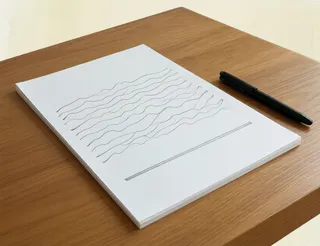
the offer letter — the written offer: pay, start date, benefits, conditions · read every line before you sign
Ben: Sure. Let's see. “This offer is contingent on a satisfactory background check.” Normal.
contingent on — contingent on = only valid if · satisfactory = with no problems · don't give notice until it clears
Mia: And this: “Your employment is at-will.” What does that mean, exactly?
at-will — = no fixed contract; either side can end the job at any time, for any legal reason · in every US offer letter · Montana is the one exception
Ben: Either side can end it at any time, for any legal reason. Every offer letter in the US says it.
Mia: Hm. And “exempt”?
exempt — exempt = paid a yearly salary, not by the hour · no overtime pay · "non-exempt" = hourly, overtime after forty hours
Ben: Salaried. No overtime pay, but nobody counts your hours either.
Mia: Okay. Benefits page. The deductible is fifteen hundred. That's lower than mine now.
the deductible — what you pay yourself each year before the insurance pays · lower is better · the benefits page tells you
Ben: Good. And put at least four percent in the 401(k), or you're leaving the match on the table.
the match · on the table — "put in at least four percent, or you're leaving the match on the table" · the match = the company adds what you add, up to four percent
Mia: Got it. “PTO accrues at one point two five days per month.”
PTO accrues — accrues = builds up little by little · fifteen days a year, but you don't get them all on day one
Ben: So you don't get all fifteen days on day one. They build up.
Mia: And it expires in five business days.
expires in five business days — expires = stops being valid · business days = Monday to Friday · three to seven is normal; ask for more if you need it
Ben: Then read it once more tomorrow, and sign. Congratulations, by the way.
Mia: Thank you. I'm a little nervous.

Mia: Hi Nathan, it's Mia. I have a few questions before I sign.
Nathan: Of course. Go ahead.
Mia: Could I push the start date back a week? I'd like a few days off between jobs.
push the start date back — push back = move to later · a few days off between jobs is a normal request
Nathan: Let me check. Yes, the tenth works. I'll update the letter.
Mia: Thank you. And my health insurance starts the first of the month after I start, right? So there's a gap?
a gap — a gap = days with no health insurance · the new plan often starts the first of the month after you start
Nathan: Your old plan usually runs through the end of the month. Start on the tenth, and the new one begins the first. No gap.
runs through the end of the month — runs through = continues until · leave and start in the same month, and there is no gap · check both dates
Mia: Perfect. And the signing bonus?
the signing bonus — a one-time payment for joining · on the first paycheck, taxed like other pay
Nathan: On your first paycheck. It's taxed, and if you leave within a year, you pay it back.
pay it back — the clawback · read the bonus paragraph before you sign
Mia: Understood. Last one: the visa transfer. I can't start until it's filed, right?
until it's filed — filed = officially sent to the government · a work-visa transfer: the NEW employer files it
Nathan: Right. Our immigration lawyer needs your last three pay stubs and your approval notice. Once we file, you can start that same day.
pay stubs · approval notice — pay stubs = the papers that show each paycheck · approval notice = the letter that came with your visa · you may start when the transfer is filed
Mia: Great. Then I'll sign tonight.
Nathan: Wonderful. See you on the tenth.

Mia: Helen, do you have a minute? Somewhere private?
Somewhere private? — how you open a serious conversation at work · your manager first, in person, before anyone else
Helen: Sure. Let's use the corner. What's up?
Mia: There's no easy way to say this. I've accepted an offer at another company. I'm giving my two weeks' notice.
giving my two weeks' notice — = I'm leaving in two weeks · say it in the first sentence; the reason can come later · two weeks is the custom, not the law
Helen: Oh. Okay. Well, I'm sad, but I'm not surprised. Can I ask where?
Mia: Northlight. A senior product designer role.
Helen: Good for you. Is it the money?
Mia: Partly. Mostly the scope. One product, end to end.
the scope — the scope = how big the work is · give a reason that is about the new job, not a complaint about this one
Helen: I understand. When would your last day be?
your last day — name the date · "two weeks from today" = count it and say the day
Mia: Friday the seventh. Two weeks from today.
Helen: Okay. Can you put it in writing? Just a short email, for the file.
put it in writing — = send a resignation email · two sentences: that you're resigning, and your last day · it goes in your file
Mia: Of course. I'll send it this afternoon.
Helen: And let's keep it between us until I tell the team tomorrow.
keep it between us — = tell nobody else yet · the manager tells the team; you don't
Mia: Absolutely. Thank you, Helen.

Helen: Mia, got a second? I talked to the partners last night.
got a second? · the partners — got a second = do you have a moment? · the partners = the owners of the studio
Mia: Okay.
Helen: We can match a hundred and eight. And we'd make you lead on the clinic account, starting next month.
match · a counteroffer — match = pay the same as the other offer · a counteroffer = what your current job offers to keep you
Mia: Helen, that's really generous. I didn't expect that.
Helen: You've earned it. I should have done it a year ago, honestly.
Mia: Can I be honest? I've made my decision. I gave them my word, and it isn't only about money.
I gave them my word — gave my word = promised · say no once, kindly, and don't reopen it
Helen: I figured. I had to ask. No hard feelings.
no hard feelings — I had to ask = it was my job to try · no hard feelings = I'm not angry
Mia: None at all. I want to leave on good terms. I'll document everything before I go.
leave on good terms — = as friends, with a good reference · the opposite: "burn a bridge"
Helen: I know you will. And if Northlight isn't what you hoped, you know where I am.
you know where I am — = the door stays open · the kindest thing a boss can say
Mia: That means a lot. Thank you.

Helen: Let's plan your handoff. What's on your plate right now?
your handoff · on your plate — handoff = passing your work to others · on your plate = your current tasks
Mia: The banking app, the clinic pitch, and the design system updates.
Helen: Okay. Nora takes the banking app. Can she shadow you for two days this week?
shadow you — shadow = follow you and watch how you work · the fastest handoff there is
Mia: Sure. I'll write a handoff doc for each project, too. Where things stand, who the contacts are.
a handoff doc — one page per project: the current state, the next step, the people · the thing your old team will thank you for
Helen: Perfect. The clinic pitch is Thursday. Can you still present it?
Mia: Yes, and I'll loop Nora in on the emails so she has the history.
loop her in — loop in = add someone to the conversation · so she has the history
Helen: Good. Set your out-of-office for the seventh, and forward anything open to me.
out-of-office — the automatic email reply · "forward anything open" = send unfinished things to me
Mia: Will do. Anything else you want me to wrap up?
wrap up — wrap up = finish · ask it in your last week
Helen: Just tie up loose ends. And Friday, lunch is on the studio.
tie up loose ends · on the studio — loose ends = the small unfinished things · on the studio = the studio pays · the goodbye lunch is a US custom
Mia: I'd like that.

Andre: Mia, come in. This is the exit interview. It's standard, ten minutes, and nothing goes to Helen with your name on it.
the exit interview — the last conversation with HR: why you're leaving, what could be better · voluntary, and usually anonymous
Mia: Okay.
Andre: What could we have done differently to keep you?
what could we have done differently? — the standard question · one honest, professional answer · never a list of complaints
Mia: Honestly? A clearer path. I didn't know what the next step here would be.
a clearer path — = a plan for promotion · the most common real reason people leave
Andre: That's fair. Would you recommend the studio to a friend?
Mia: Yes. It's a good place to start.
Andre: Good. Now the practical part. Your final paycheck comes on the regular payday, the fifteenth, and it includes your unused PTO. Six days.
final paycheck · unused PTO — final paycheck = your last pay · when it comes is state law; often the next regular payday · unused PTO = vacation days you didn't take
Mia: They pay out? Great.
pay out — = pay you money for the unused days · required in some states, the company's choice in others · ask before your last day
Andre: Your health insurance runs through the end of the month. You'll get a letter about COBRA, in case you need to continue it.
COBRA — keep your old health plan after you leave, for up to eighteen months, paying the full price · only if your new plan leaves a gap
Mia: I shouldn't. The new plan starts on the first.
Andre: Perfect. And your 401(k) stays where it is. You can roll it over later.
roll it over — roll over = move the retirement money to your new plan or an IRA, tax-free · your own money is always yours; the match may take years
Mia: Okay. Thank you, Andre.

Andre: Last day! Laptop, badge, and the key fob, please.
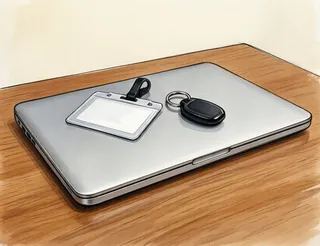
laptop, badge, the key fob — "Laptop, badge, and the key fob." · what you hand back on the last day · the key fob = the small plastic key that opens the door
Mia: Here you go. I cleared my personal files this morning.
my personal files — copy your own photos and documents BEFORE the last day · the laptop is wiped the moment you hand it in
Andre: Thanks. I'll wipe it anyway. Your email will forward to Helen for thirty days.
wipe it · forward — wipe = erase everything on it · forward = send on to another address · thirty days is typical
Mia: And if someone calls for a reference?
Andre: We confirm dates and title. Anything more, ask Helen directly.
dates and title — many companies only confirm when you worked there and what your job was · a personal reference comes from your manager, so ask her before you go
Helen: She can use me anytime. Mia, this is from all of us.

from all of us — "This is from all of us." · a card everyone signed, and a small gift · the office goodbye
Mia: Oh, you didn't have to. Thank you.
you didn't have to — what you say when you get a gift · then open it, in front of them
Helen: Keep in touch. And don't be a stranger.
keep in touch · don't be a stranger — don't be a stranger = visit, call, stay in contact · the standard warm goodbye
Mia: I won't. This place taught me a lot.
Helen: Go on, before I cry.

Nathan: Hi Mia, it's Nathan. Quick one. The background check flagged something.
a quick one · flagged — a quick one = a short question · flagged = marked as a problem to check · it usually means a date
Mia: Oh. What is it?
Nathan: Your start date at the studio. You wrote March, and they reported April.
they reported April — your old employer confirms your dates; when they don't match yours, the check flags it · the number one problem
Mia: Right. I started as a contractor in March, and went full-time in April.
a contractor · full-time — a contractor = paid by the project, not an employee · went full-time = became an employee · the usual reason dates differ
Nathan: That explains it. Can you send me the contract, or a pay stub from March?
the contract — proof = a contract, a pay stub, an offer letter · keep them all
Mia: I have the contract. I'll email it today.
Nathan: Perfect. That clears it. Everything else came back clean, including your degree.
clears it · came back clean — clears it = solves it · came back clean = no problems found · they verify your degree too
Mia: Good. I was a little worried.
Nathan: Happens all the time. Dates are the number one thing.

Nathan: Mia, it's Nathan. Just going over your first day. Did you get the onboarding email?
the onboarding email — onboarding = the process of joining a company · the email: forms, the portal, day-one logistics
Mia: I did. There's a lot in there.
Nathan: The important part is the I-9. It has to be done within three business days, so bring your passport on Monday.
the I-9 — the form that proves you may work in the US · you fill your part by day one; they check your documents within three business days
Mia: Just the passport?
Nathan: Passport alone is enough. Otherwise a license plus your Social Security card. The W-4 and direct deposit you can do in the portal before Monday.

two forms of ID — a passport alone · OR a license plus your Social Security card · list A, or list B plus list C · the company may not choose for you
Mia: Okay. What time, and where?
Nathan: Nine at reception. Ask for me. Business casual, your laptop will be waiting, and the first week is orientation, so no pressure.
business casual · orientation — business casual = neat, no suit, no tie · orientation = the first days: learning how things work, no real work yet
Mia: Should I bring lunch?
Nathan: Not Monday. Team lunch, on us.
on us — on us = the company pays · say yes
Mia: Great. See you Monday.

Nathan: Welcome! Coffee first, then paperwork. Passport?
Mia: Here.
Nathan: Perfect. That's the I-9 done. Now the W-4. Filing status: single or married?
the W-4 · filing status — the W-4 = the form that sets how much tax is taken from each paycheck · filing status = how you file your taxes
Mia: Married. We file jointly.
file jointly — = one tax return for both of you · "married filing jointly" is the box
Nathan: Okay. Step two is for two incomes; check it if Ben works. Dependents, none?
two incomes · dependents — step two of the W-4 = check it if your partner works too · dependents = children or others you support · none = leave it blank
Mia: None.
Nathan: Sign here. That sets your withholding. Direct deposit: routing and account number.
withholding · routing and account number — withholding = the tax taken out of each paycheck · routing number = your bank's code; account number = yours · both on a check or in your banking app
Mia: I have them on my phone.
Nathan: Good. This is the handbook; sign that you received it. And smile, badge photo.
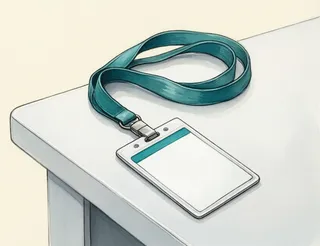
the handbook · the badge — the handbook, sign that you received it · the badge: your photo, your door key, your name to everyone
Mia: Now? Okay.
Nathan: Done. Your email is Mia dot Carter at Northlight. The password is in the portal.
in the portal — the portal = the company's HR website: pay, time off, benefits, your forms · bookmark it on day one
Mia: Thank you. That was painless.

Omar: Hey, Mia! Welcome. This is you. We hot-desk, but this one's yours on office days.

this is you · hot-desk — "This is you." · we hot-desk = nobody has a fixed desk; you take a free one · "yours on office days" = the exception
Mia: Great. Is this my laptop?
Omar: Yep. Log in, then set up two-factor. It'll text you a code.
two-factor — = a code on your phone plus your password · every company system now
Mia: Okay. And the wifi?
Omar: It'll connect on its own. Coffee's in the kitchen, bathrooms are past the elevators.
Mia: Got it. When does the day start?
Omar: Stand-up at nine thirty, every day, ten minutes. Then whatever's on your calendar.
stand-up — the short daily team meeting, standing · each person: yesterday, today, any blockers
Mia: Is there anything I should read first?
Omar: The design system, and the last three retro notes. I'll send the links.
retro notes — a retro = the team's look-back meeting after each project: what went well, what didn't · the fastest way to learn a team
Mia: Thanks, Omar.
Omar: And if you can't find something, just ping me. Nobody expects you to know anything this week.
ping me — ping me = send me a quick message · the permission every new hire needs to hear

Claire: Okay, quick round. Before we start, everyone, this is Mia. She started today. Mia, want to say a few words?
say a few words — = a short introduction · have three sentences ready on day one
Mia: Hi everyone. I'm Mia. I was at a design studio downtown, and before that a banking app. Really happy to be here.
the three-sentence intro — "I'm Mia. I was at a design studio downtown. Really happy to be here." · your name, where you were, that you're glad · nothing else
Omar: Where are you from originally, Mia?
from originally — = before you came here · a friendly question; answer as much or as little as you like
Mia: Far away. I moved here about a year ago.
Omar: Then you'll fit right in. Half of us did.
fit right in — fit right in = belong easily
Claire: Mia's shadowing Omar this week, so be nice to both of them. Okay, updates. Omar?
shadowing · updates — shadowing = following and watching · updates = each person says what they did and will do
Omar: Yesterday I finished the booking flow. Today, testing. No blockers.
no blockers — the stand-up formula · a blocker = something stopping your work that someone else must fix
Claire: Mia, you don't need to give an update this week. Just listen.
Mia: Okay. I'll try to remember everyone's names.
Claire: Nobody does in the first week. Right, let's go.

Claire: So, this is our first one-on-one. Thursdays at ten, every week. How's it going?
a one-on-one — a private weekly meeting with your manager · bring questions; it is your time
Mia: Good. Everyone's friendly. A lot of acronyms, though.
Claire: Write them down and ask. Here's your thirty, sixty, ninety.
thirty-sixty-ninety — the plan for your first three months: what to learn by day thirty, do by sixty, own by ninety · ask for one if you don't get one
Mia: Thank you.
Claire: First thirty days: listen, meet everyone, and learn the product. No projects.
Mia: Really? Nothing?
Claire: Nothing. Sixty: you take one small thing. Ninety: you own a flow.
own a flow — own = be responsible for · a flow = one part of the product, start to finish
Mia: That's very clear. Thank you.
Claire: Omar's your onboarding buddy. Questions about how things work go to him; questions about what matters come to me.
onboarding buddy — the colleague assigned to help you settle in · "how things work" questions go to him; "what matters" to your manager
Mia: Got it. One thing: my visa lawyer needs a letter from HR.
a letter from HR — the employment verification letter: your title, start date and pay, on company paper · ask your manager, HR signs it
Claire: Send me the request, I'll sign it today. Anything else?
Mia: How do I request time off?
request time off — = ask for vacation days · usually in the portal, two weeks ahead
Claire: In the portal, two weeks ahead. Take it, by the way. People here don't, and I don't like it.
Take it. — = use your vacation days · a good manager says it; a good employee does it

Mia: Omar, do you have a second? Can I get your eyes on this?
Can I get your eyes on this? — = please look at this · the polite way to ask for a quick review
Omar: Sure. What is it?
Mia: The booking flow. I think the calendar step could go, but I don't know the history.
the history — = what was tried before, and why · ask before you propose a change
Omar: Ah. We tried that. Support tickets went up, because people booked the wrong day.
support tickets went up — support tickets = customer complaints · the team's memory of a failed idea
Mia: So it stays. Okay. Is there a doc on that?
Omar: Somewhere. Ask in the design channel, someone will find it faster than me.
the design channel — the channel = the team's chat group · public questions get faster answers
Mia: I don't want to look stupid in the channel.
Omar: You won't. New people asking questions is normal. Not asking is the problem.
not asking is the problem — "New people asking questions is normal. Not asking is the problem." · nobody remembers your questions; they remember your silences
Mia: Fair. One more. How do I book a meeting room?
book a meeting room — book = reserve · through the calendar, like a normal invite · "book early, the good ones go fast"
Omar: The calendar. Pick the room, it's a normal invite. And book early, the good ones go fast.
Mia: Thanks. I owe you a coffee.
I owe you a coffee — I owe you a coffee = thank you; I'll buy you one · I'll hold you to that = I'll remember, and I'll expect it
Omar: I'll hold you to that.

Claire: Friday. You survived. How was the first week?
you survived — a joke: you made it through · the Friday check-in
Mia: Good. Tiring. I met about forty people.
Claire: What surprised you?
What surprised you? — the best question a manager asks in week one · have a real answer, and a positive one
Mia: How fast decisions happen. At the studio, a change took a month.
Claire: That's the speed Dan wanted. Anything you need from me?
anything you need from me? — = what can I unblock for you? · name the thing you're waiting on
Mia: Access to the analytics dashboard. I asked on Tuesday, still waiting.
Claire: I'll chase it down. Anything else?
chase it down — = follow up until you get it · "I asked on Tuesday, still waiting" is exactly what to tell her
Mia: My health insurance. It starts on the first, right?
Claire: Yes. But you have to enroll in the portal before then. Thirty days from your start date, or you wait until open enrollment.
enroll · open enrollment — "You have to enroll in the portal." · thirty days from your start date, or you wait until open enrollment · enroll = sign up for the health plan
Mia: I'll do it today.
Claire: Do. Okay, go home. Have a good weekend, Mia.
have a good weekend — the Friday goodbye at every US office · the answer: "You too."
Mia: You too. See you Monday.